Friday, October 30, 2009

This Time of Year

Autumn Days
These are the days of gold and blue
Of yellow, orange, and scarlet too.
Of chilly nights and clear, crisp days.
Of morning shrouded gray with haze.
Of chattering birds that congregate
On field and fence and garden gate.
Of pumpkins laying abandoned, lost
Since vines have felt the first, hard frost.
Of roses brightest of the year.
And rows of cornstalks, brown and sear.
Of rosy apples, juicy and sweet.
Of leaves that rustle at our feet.
Of low hung ribbons of smoke that glides
From burning leaves at eventide.
Of cold, gray mist that meets the dawn
That turns to rain before it's gone.
These are the days and all too few.
These autumn days of gold and blue.
Geraldine Kilgore Copyright 2009

And of course, we hope and pray for dry weather so the farmers will be able to harvest this crop!


J.R.

Thursday, October 22, 2009

Life Walk

Cheryl White... horsewoman, maverick. Her journey has been a long road with many twists, turns, surprises, disappointments, and now, steps of faith.

As a two year old, Cheryl's father, a veterinarian, sat her upon her first pony (also a two year old), and was told that when her tears ceased, she would be allowed to dismount... from that time on, horses have been central to her life. Her grandfather raised horses in the 1920's and 30's, and her father was an ardent calf roper, team roper, and always loved to barrel race. Cheryl considers herself a "third-generation cowboy/rancher". She grew up competing in rodeos and was very successful in barrel racing, and with her father also being involved in the barrel racing competitions, she was exposed to many fine pedigreed horses that she feels privileged to have ridden.

After graduating from college, Cheryl immersed herself in the work world; she has worked in journalism (having written articles for equine publications), sales with the Xerox corporation and Johnson & Johnson, was a stockbroker for seven years (at one point being one of the only two women in Omaha, Nebraska who sold stocks), a small business owner, and for the past four years, has been working in the pharmacy department at Avera St. Anthony's Hospital in O'Neill, Nebraska. But her first dream has always been to breed and train the American Quarter Horse--a dream that she knows God has instilled in her heart. Over the years, she has made great sacrifices to achieve this dream.


Eighteen years ago, Cheryl, who lives on her ranch in Atkinson, Nebraska along with her two cattle dogs, 'Pete' and 'Jubie', started out with two good brood mares, using outside Stallions for breeding purposes. She has bred, raised, and trained many horses over the years, and currently owns ten 'great mares', four baby colts, and the 'love of her life'---her Stallion 'Yardstick', or 'Stick' for short (meaning he is the one by which she measures the quality of all other Stallions.) Cheryl explains, "a great mare not only has the parentage to do what I want, but they have to ride and have the physical ability and the mind to do what I want". Cheryl breeds horses for barrel riding, roping, and reining.

Since she doesn't start training a horse until it is three years of age, ("a two year old has the attention span of a gnat..."), she isn't able to immediately discern if they are of the quality she is aiming for, so essentially, the horse "just hangs out here" until it reaches a point when Cheryl can make that judgment. One realizes the time, effort and love it takes to bring this goal to fruition---and in the meantime, she's falling in love with the horse which in turn, makes it extremely difficult to let it go.

But, let it go she must, and that is the where the difficulty of 'generating hype' comes in--the goal is to get the horses out to the 'right' people--those with money or influence. Ideally, that would mean a website (it's in the planning stage), and reaching the people who are going to do something with the horses. Usually this is accomplished by word of mouth---that it becomes known that her horses are of stellar pedigrees. Cheryl has admired the traits of the Driftwood horses; an amazing horse in the 1930's that had a lot of speed, athletic ability, and an instinct for cattle. She chose this pedigree long before it became popular--she just thought they were nice horses. Now, they have become "hot property". She acknowledges that she couldn't have foreseen this, and feels that this good fortune for her, is surely from God. She has a pedigree that people want, "now it's just a matter of getting it out there". Her desire is to raise a "quick athlete" that can be used for team roping, calf roping, and barrel racing. "This bloodline (Driftwood) excels at these traits".


Cheryl has a bit of a claim to fame... one day out of the blue, she received a call from a certain Mr. James B. Pickens, Jr. asking for some documentation for one of her horses that he had purchased by way of a seller in Montana. Cheryl had no idea who this person was, and she simply followed through on his request and thought nothing of it, only expressing the hope that the horse would be a blessing to him. She later found out that he is the star of the TV show, 'Grey's Anatomy'. Mr. Pickens has been a spokesman for the AQHA (American Quarter Horse Association) and is also an avid horseman who competes in rodeo events, and team roping and penning.


Cheryl says her desire to raise a better horse ("the goal is to have a colt that is a better horse than it's parents were") came from her grandfather and from God. "It becomes your whole life work". "You might look at these horses and think they are just a horse, but I can look at them and watch how they move across the ground and know if they're what I want or don't want". "So many people walk through life without a dream, and so few people that we rub shoulders with don't know what it's like to sacrifice for a dream". She continues, "At the end of the day, it's never been about making money, it's always been about how I just want the horses to be a blessing". "The one saving grace of my life has always been a horse". "God can take the ashes of your life and grow roses in them...I am one of the most blessed people I know".


Her number one goal in life is to "honor God with these horses". At this point in her life, she doesn't know if she should "scale it back or ramp it up". "All the hard work is done, now I've got to do the next work, which is the hardest work of all---I've got to let 'em go". "I'm at that crossroads of steppin' out in faith again..."


J.R.


Sunday, October 18, 2009

Returning For a Visit

It's a beautiful fall day--this may be our only fall day... so I decided to take a leisurely ride along the Cowboy Trail. Just like the last time we visited the trail, when you were able to kick back in your chair, that's how we'll handle it this time also. I'll ride the bike, and you just keep an eye out for some of nature's beauty.
I was hoping I would see these horses... They galloped around the pasture, kicking up their back feet, nipping at each other's necks, and even at one point, rolling around on the ground, their hooves up in the air.

While avoiding the many Garter snakes on the trail, I noticed the abundance of deer tracks. And I'm wondering if this little fellow's fur coat is any indication of the severity of our coming winter weather.

This electric pole, out of commission long ago, still has the old insulators on top--after all, this trail used to be the old railroad line...a few railroad ties and iron scraps can be seen along the path.

These horses in the opposite field, were lazily grazing and had come to the windmill to get a drink. I'd have liked to have been closer, but those 'No Trespassing' signs mean what they say, so I had to be content with poking my camera through a metal gate.


A hawk circled overhead riding the air currents, and a warm breeze blew from the south, bringing the scent of sweet clover and cottonwood trees and reminding me of my days growing up and the passing of time.
Thanks for coming along for the ride...
J.R.


Saturday, October 17, 2009

Coming Up...

This morning I visited with Cheryl White of Atkinson, Nebraska. She breeds and trains American Quarter horses. Her story will be up next week...she's a unique and interesting woman.

J.R.

Wednesday, October 14, 2009

Nebraska, USA

Nebraska, USA


There's a land of quiet meadows
And of cornfields and of grain.
Where the wind sighs through tall grasses
And sweeps across the plains.
There are rolling hills, wide valleys,
There's old barns and country lanes.
There are cities, little hamlets,
Also rivers, creeks, and streams.
Where you'll find a friendly people
Who will great you with a smile.
They'll stop and make you welcome
And chat with you awhile.
Here the meadowlark serenades you
Thru out the summer day.
You'll find it west of the Missouri,
It's Nebraska, USA


Copyright 2009 Geraldine Kilgore


J.R.

'The Church That Is No More...'

On a recent post about poetess Geraldine Kilgore, she mentions the little town of Dorsey (approximately 20 or so miles north of O'Neill--'as the crow flies'), that 'is no more'. I came across this photo of the Dorsey Presbyterian Church, taken in 1996. Within the year, the church had burned, but the sweet and tender memories of family and friends who worshipped here, remain.

J.R.

Thursday, October 8, 2009

Enterprising Woman

The 'Pioneer Spirit' is very much alive and well at Sue Chohon's place of business in O'Neill, Nebraska. Step inside and you will observe a very industrious lady with a seemingly odd combination of interests. 'The Sundance Shop' is where Sue works Monday through Friday with her laundry and ironing service, plus her lampshade business.

Twenty-five years ago, when Sue first began cleaning homes for hire, a few of her clients enquired as to whether she would also do their ironing. She added this service to her cleaning jobs, and her customer base expanded. Then, realizing she would rather "clean houses less and iron more", she soon dropped the housecleaning and continued with the ironing, eventually adding a laundry service. These jobs fit in perfectly with being a stay at home mom with three young children.

In the meantime, she became interested in the creative art of replacing old lampshades with new fabric and decorative bead and fringe trims. Her mother had done this for years, and when Sue first tried her hand at it, she "loved it", discovering she had quite a talent for this venture. Again, here was another ingenious way to earn extra income and still be able to care for her home and children. Sue says, "You do what you can do without a (college) degree...", and she definitely has the 'can-do' attitude.


Three years ago, Sue purchased a charming little house at the west end of town on Highway 20 as a base for her business pursuits. As time has passed, she has realized that she would prefer to place more emphasis on her lamp shade creations and less on the ironing--(I guess you could say that she is 'pressing on' to bigger and better things...) The house is a perfect setting for showcasing her exquisite lamps; original woodwork fills the richly colored rooms where the lamps are displayed in eye-pleasing vignettes.

Ideally, to begin the process of creating a new lampshade, there would still be the original wire shade frame for the lamp, although Sue can order a wire frame and come up with a lamp base--whatever the customer may prefer. She finds lamps at auctions and sales, and on occasion, has come across some real treasures at garage sales. And if need be, this talented lady can also do a simple re-wire. Sue has a stash of fabric available, or she can order fabric, or a person can supply their own. The same goes for the fringe trims and beads---she can order through certain companies, although she says the fringe is the hardest to find, and only a few companies will dye it a specific color. 'Candy glass', or 'sugar paper' shades are popular and unique in their texture and appearance...they're "kinda spendy", so creating this particular fabric finish is a technique Sue would like to learn how to do herself.

The process of making a shade is quite labor intensive and takes several hours. First, Sue wraps the wire frame with twill tape and allows it to dry, then paints the tape (if needed) to match the fabric color. She makes a pattern with foil, cuts out the fabric and lays it on the shade, and then glues it to the taped wire. Next, trims are added to cover seams, and the final striking touch that we all oooh and ahhh over... that gorgeous moody fringe and glistening, colorful beads that absolutely glow and sparkle when the lamp is lit. She tops it off with an attractive finial, and her creation is ready to light up a special corner in any room.

So, the industrious, inventive, and clever Sue Chohon has got it covered--from the shirt on your back to the shade on your lamp. Stop in when you are in town and see what she can do to 'light up your life'.

J.R.


Tuesday, October 6, 2009

'River Hills-Niobrara'--- a poem

River Hills-Niobrara
The hills stretch out to the far beyond,
Rolling in gentle slopes to the valleys,
Which melt into one great panorama of space.
The scope of sky and range of land
Sweeps on and on,
Extending as far as the eye can see,
Meeting in a distant gossamer blue horizon.
In this quiet land, this open land
Not so long ago
The Indian knew the freedom on the hills,
The same vast openness still prevails.
In this big land
Space is the gratuity to the soul.
Copyright 2009 Jerrie Kilgore

J.R.

Wednesday, September 30, 2009

The Little Town That Was

Geraldine 'Jerrie' Marston Kilgore was born in a small Nebraska town that no longer exists...Dorsey, Nebraska. This little country town was located approximately 20 miles northeast of O'Neill, and was her home until 1950. She reminisces about her days as a child growing up on her family's farm...

"My sister, brother and I attended school at Dorsey. We lived on a farm just over a mile from school, and walked to and from the school almost every day. We always found something to entertain us as we walked along."

"We had the whole outside for our play yard---we played cowboys and Indians (wouldn't that just amaze the grandchildren with their play toys of today?) We fished in the Steel Creek, which, in those days, had Speckled and Rainbow Trout. What a day it was when we caught one! We had a horse right off the Rosebud Reservation, that could not be bridled nor saddled. I was afraid to ride bareback, but my sister rode that horse all over the place."

"My brother, sister and I always had chores that were done daily. In the fall of the year, when the days started getting shorter, we would rush through our chores so we would have time to play games. I can't remember what the games could have been, but I do remember running around in the yard until nightfall."

"My chores were to see that the chickens were watered and fed (after they were penned up for the cold months) and to get in wood for the next day. I chopped wood and one evening while in the process of doing this, one of our cats (which we always had plenty running around outside) jumped onto the chopping block just as I was coming down with the axe. I need go no further with this discussion as I am sure you all can imagine what happened. In the really cold part of winter, I had to carry water to the chickens before I went to school, be sure the little burner was going on the heater that kept it from freezing. In the evening, the water was emptied and the burner blown out for the night. It was too dangerous to leave it burn all night. We always let the chickens run free in the summer, but when the nights started turning cold, we had to go out in the late evening after the chickens had gone to roost and catch every one of them and put them in the chicken coop. For some reason I cannot fathom, I loved that job! I think there was most likely a Harvest Moon and it all just seemed too marvelous. I don't remember that folks had to remind us to do our chores, it was something farm kids did. We weren't any different than anyone else---we all had jobs to do and did them without fussing. It was a good life."

"We had to get the milk cows in the evening which meant a long walk out into the pasture. Other people tell of their cows coming home at milking time, but ours never did. Our neighbor across the creek had cowbells on his cows and I just loved to hear the tinkling bells in the evening when they were coming down to the barn. We lived in a valley, and I can still remember how on hot summer days the temperature changed as we started down into the valley---it was always much cooler. Behind our house was a stand of wild crab apples. In the evening when they bloomed, it was the most heavenly scent, I just loved that as a child. It was like a huge, pink bouquet and I can remember wishing they would last all summer. The lilac bushes were huge, like none I have seen since...maybe it was that I was just a child! I remember my mother's vegetable garden...she always planted zinnias in with the vegetables. I continued that in later years when I had my own gardens."

"In the winter, when we got heavy snowfall we had to shovel the snow off the shed roof on the back of the big barn. As smaller children, we would have a big argument who's turn it was to shovel as we all couldn't wait to get up on that roof. As we got older, we soon learned it was more like work and then the argument went the other way!"

Jerrie, mother of four grown children, 81 years old and now widowed, resides in Indiana. She says, "I have written poetry all my life. Have had the good fortune of having a few poems published. I have been gone from Nebraska for many, many years, but I left my heart back there when I moved."

I will be posting some of Jerrie's poems from time to time, as her poems seem to have the heart and soul of Nebraska within the lines.

J.R.

Dorsey

Dorsey was a post office and a little country store.

Dorsey was a place that is no more.

But oh! The happy memories, like a treasure I embrace,

Of the time I was a carefree child in that long ago country place.

I hold onto the memories with a passion now, it seems.

And I'll go back to Dorsey, but only in my dream.

Yes, I'll go back to Dorsey and I'll roam the hills once more.

And walk the rolling prairie where my steps have gone before.

I'll hear the night winds whisper, as I stroll beside a stream.

I'll be going back to Dorsey, but only in my dreams.

Copyright 2009 Geraldine Kilgore

Tuesday, September 22, 2009

A Success Story

Whenever I interview someone for a story, I'm never exactly sure what the 'angle' will be---what the real story will be. I knew this would be about La Herradura and about Juan Pablo Sanchez and his wife, Magdalena (Maggie) who operate the restaurant along with Juan's sister, but I found that this story is more about opportunity and gratitude, and struggles and success.

Juan was born (one of three children) in Ciudad Jimenez in the state of Chihuahua, Mexico. He is the son of a farmer/rancher who also ran a small, family grocery store. It's obvious that Juan is a natural-born salesman---from the time he was very young, he helped out in his parent's store. He says, "I like all kinds of business...I sell cars, horses, I like it a lot."

Juan first came to Omaha, Nebraska in 1998 at the age of 19, where he and his uncle worked in construction. Juan met Maggie at a Rodeo dance (she has a good story) and they later married and moved to O'Neill. He says, "When I came to O'Neill, I did not speak much English and it was very hard." He began working at Herd Co in Bartlett, Nebraska, in a supervisory position as a cowboy. After a year and eight months, he received a promotion (his second) -- he had proved to be invaluable in translating English for his fellow workers.

At this time, Maggie was working at 21st Century Growers (in O'Neill) and she suggested that Juan open a small place to sell tacos and burritos. Juan saved his money and opened a small eatery, however, it closed sometime later. By this time, Maggie was expecting and was unable to continue to work. Being the 'strong woman behind her man', she urged Juan to open another, larger restaurant. Investors stepped forward, and 'La Herradura', with it's extensive menu, opened for business in 2005. Maggie does the cooking---delicious authentic Mexican family recipes---Juan's sister helps out, and Juan is the waiter.

Towards the rear of the restaurant, and through a doorway, is Juan and Maggie's small, Mexican grocery store. (It can also be accessed from the east side of South 4th Street). Juan stated that to obtain authentic Mexican foods, the Hispanic population had to travel to Norfolk or Grand Island, and since not many of the people have a car, it was a hardship and inconvenience. Now, Juan travels to Omaha every two weeks or once a month to purchase items for the store. The store is quite unique, carrying everything from pinatas to pickled pigs feet. With great pride, he showed the various varieties of peppers, dried shrimp (and fresh frozen shrimp), tostados, fresh cow cheese, laundry detergent, and even Coca-Cola in bottles. Juan says the store is "good for the Mexican people."

Juan appreciates the fact that their children (two boys and two girls) can walk to the pool, park, or play with friends and feel safe. He said, "I like it here in O'Neill." His dream is to someday own a small farm or ranch (he owns five Quarter horses that are pastured south of town). As for his love of business, he plans to open another restaurant in Omaha and hopefully one in his hometown in Mexico.

Maggie, who uses her hands and eyes quite expressively when she speaks, came from a very poor background. She was born in the town of Autan, in the state of Nayarit, Mexico. The family (she has three brothers) home was built of tree limbs with a cardboard roof, and sheets of plastic to cover the roof and walls. The floor was dirt, but, "very clean". It was not unusual for her family to go hungry, and since her parents were very old, she felt that she must come to the United States to find work and ultimately to help her parents. She relates the story of when she was attending school in Mexico, her mother would not have the money for Maggie to take the bus. Maggie's little brother would go to the train station across the street and shine shoes to earn her bus fare.

In 1992, along with some friends, Maggie boarded a bus headed for Los Angeles. She found herself living on the streets, searching for jobs where she could cook and clean in a home in exchange for a place to live and eat. She worked in homes for about a year, then came to Omaha where two of her brothers lived. This is when she met Juan--at the Rodeo dance. After talking with him, and getting to know him, she could tell that he was not like the other men. "He knew what he wanted...he wanted a family, he wanted to stay the rest of his life with a woman. So I say, "he's a good man." "He's my man, my love."

Maggie lived in California for one year, and for twelve years in Omaha. She says, "When I came to O'Neill, I see Heaven for my family." "Most people (Americans) are very nice, and I appreciate that more because they are not Mexicans." She adds, "I pray everyday...I don't pray for money-- I pray for my children to be healthy and to have enough food to eat, to pay my bills and for customers." "People come from another country because we don't have enough money to live". "Jesus gives you the opportunity to come. So, I come, work hard, respect the people, respect the law." When she has witnessed other immigrants drinking or doing drugs, she asks them, "Why do you put this opportunity in the trash?" She appreciates the United States for the opportunity, and also thanks the many people who have helped her.

She has many dreams---she wants to inspire her children to attend a university, and she wants to "make them very good people". She dreams of taking her children to Mexico "to show them where I was born, how I lived, so that they would know their (extended) family." "That would help me to explain to them why we're here in the United States and why we work so hard." Additionally, she would like to open a day care business where she would teach Spanish to the English speaking children.


So, come. Relax. Meet the wonderful, gracious, friendly people who run this restaurant. They and their lives are an inspiration, and we are blessed to have such a caliber of people in this town.

J.R.

Friday, September 11, 2009

The Ties That Bind

"My Grandmother loved to sew from the time she was very young..." That statement by Beverly Galloway of rural Holt County, Nebraska, is just the beginning of many heartwarming stories of how her talented and thrifty Grandmother designed and created not only aprons for herself and others, but also how she provided for her family's clothing needs.


When Beverly's grandmother was young, she wanted to attend a school in Chicago to learn tailoring and how to be a seamstress, but her parents felt that the school was "too far away" for their daughter to be, so any dreams of professional training were laid aside. Instead, she put her skills to use sewing most of her own clothes, and clothing for her younger siblings and family. Later, she married (she sewed her own wedding dress and trousseau) and used her talent for clothing design and construction to sew her husband's shirts, suits, pants, clothes for herself, and even her daughter's (Beverly's mother) high school graduation dress.


Beverly's own mother's interests were more in the vein of cooking, tending her chickens, and her vegetable garden---she preferred these over sewing---so Grandmother stepped in (quite happily, I'm sure), and sewed for Beverly's older sisters, and made most of Beverly's clothes. Grandmother would bring some fabric to the house, and with Beverly sitting beside her, they both would pour over a current dress catalog, with Grandmother suggesting which piece of fabric would work well with what specific design. Beverly would choose some dress styles, and then Grandmother would ask to see a "well-fitting dress" which she would use for measurements. In a week or two, Beverly would be presented with a beautiful, lovingly made dress.


And of course, the aprons! What a treasure trove of styles, colors, and fabrics---both serviceable and fancy. An apron was standard, everyday wear--a homemaker would have a 'work' apron which most likely was a full frontal covering that would protect the front of the dress from dirt, food splashes, etc. The bottom half of the apron could be used to carry vegetables in from the garden, to gather some chicks or eggs, to shoo away flies, or even to give refuge to a shy or hurting child. A small pocket on the right was a convenient place to tuck a hankie or a popped button that may have been picked up off the floor. A good number of the aprons are made out of flour sack material, as in those days, that is what flour and sugar came in---a very sturdy, tightly woven fabric that just happens to wear like iron.


Beverly said most of the aprons were made by her grandmother, but there are also purchased ones and some were gifts. If a guest was staying for a few days at the farm, ("Grampa loved guests...") they might present an apron as a gift for the hospitality they were shown. Her grandmother sewed aprons for nearly every female she came across, it seems, and she was incredibly creative with embellishments: rick-rack, 'Swedish' embroidery, multi-colored crocheted trim, and appliques. She even had the ingenious idea and resourcefulness to use the squares in gingham material as a 'cross stitch' pattern.


Beverly commented, "She was always one who could take a few cents and she'd have a gift for someone. She remembered all of her sisters, all of her grandchildren...there was never a birthday or a Christmas that she didn't make sure that she had a gift for everyone."
As Beverly fondly told these stories and shared the sweet and tender memories of her grandmother's love and generosity, the 'Proverbs 31' woman came to my mind: "She looks well to the ways of her household, and does not eat the bread of idleness...her children rise up and call her blessed..." (Proverbs 31, verses 27 & 28)

Joy Richter


Grandma's Apron
by Tina Trivett
The strings were tied, it was freshly washed, and maybe even pressed.
For Grandma, it was everyday to choose one when she dressed.
The simple apron that it was, you would never think about;
the things she used it for, that made it look worn out.
She may have used it to hold, some wildflowers that she'd found,
Or to hide a crying child's face, when a stranger came around.
Imagine all the little tears that were wiped with just that cloth.
Or it became a potholder to serve some chicken broth.
She probably carried kindling to stoke the kitchen fire.
To hold a load of laundry, or to wipe the clothesline wire.
When canning all her vegetables, it was used to wipe her brow.
You never know, she might have use it to shoo flies from the cow.
She might have carried eggs in from the chicken coop outside.
Whatever chore she used it for, she did them all with pride.
When Grandma went to heaven, God said she now could rest.
I'm sure the apron that she chose, was her Sunday best.
I miss you Grandma...


Monday, September 7, 2009

From the Congo to the Country

Kirsten Wettlaufer, the oldest of three children born to Missionary parents in the Democratic Republic of Congo-- formerly known as Zaire-- had what some of us might consider an unusual childhood and upbringing, but for her and her siblings--a younger sister and brother, and the other 'MK's (missionary kids), living life in the 'Bush' alongside the Lunda Tribe, was her 'normal'.

Her father was working in the Democratic Republic of Congo with a agricultural mission group, and her mother was a Danish missionary nurse. The couple met, and as they say, the rest is history. But what a history! Raised mostly in the southwest corner of the DRC--a grassy savanna, Kirsten's family lived with approximately eight other missionary families at a mission station. Her father taught at the missionary Ag school and her mother ran the health clinic. Their neighbors, the Lunda people, lived in mud huts with thatched roofs. French is the official language in this area, but Swahili was also spoken.

Kirsten has fond memories of days spent playing in the Bush with her younger sister--she now marvels at how they never got hurt as snakes were abundant. Pets included dogs, cats, a guinea pig, and their monkey, 'Chatterbox'. Family excursions included camping trips when Kirsten enjoyed pond fishing. Television was nonexistent..."you played until dark, and then you either read a book or went to bed." Life at the settlement was somewhat isolated from the outside world as an airplane would deliver mail only once a month. The family always had a car, but considering the poor condition of the roads, it took quite awhile to reach their destination. Kirsten remembered that while driving through neighboring villages, children would come running to see the car... "and you didn't dare stop", as stopping would have most likely resulted in a mass of arms and legs crawling all over and into the car--this having been the most exciting event of the year for those children.

At the age of five and one half, Kirsten was sent to a British boarding school in neighboring Zambia, and if someone were to lament about how difficult a walk it was for them to get to school, Kirsten's story would certainly top theirs: She would board a small plane to fly to another missionary station, be driven by car to the Zambian border where she then crossed the river by boat. Upon reaching the other side, the teachers would be waiting with a large, army-type truck to drive them the remaining hour-long ride to the elementary school. After First grade, her family returned to the United States to raise missionary funds. This would be the pattern for the rest of her childhood, with the family returning to the states once every four years, resulting in Kirsten attending school in Lincoln, and also Page, Nebraska. During her high school years, she attended an American school in Kinshasa, the capital of the DRC, graduating in 1978.

During the years the family lived in the DRC, Kirsten's father purchased many artifacts from the local people to help them out financially. Kirsten has an amazing collection of handmade items, including ceremonial masks, a heavy carved bracelet (she said the tribal women's arms would be covered in these bracelets), a bird carved out of a cow horn, a clay figure, hippo tusks, a carved wooden snake, a beautiful clay water vessel, malachite 'eggs', and a intricately woven food storage basket.


Kirsten returned to the United States to attend college and later married her husband Randy in 1980. Now living in her fraternal grandparent's house in rural Page, she and her husband are involved with raising cattle and grain production. They have four children, two grandchildren, and "one on the way". Kirsten enjoys her beautifully landscaped yard (the setting for her daughter's wedding this past summer), her horse 'Haley', and dog 'Chewy'. Interests include gardening, landscaping, refinishing furniture, quilting, and just enjoying kids and family. She states, "kids and family are extra special just because of (my) growing up away from a lot of family."

When I inquired as to whether or not she would like to return to the DRC, she said, "I'd like to go back and visit, but I like my hot water, I like my electricity."

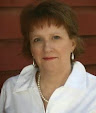
Kirsten has just recently reconnected with former high school classmates on Facebook-- she is finding that the sharing of information over long distances is a lot faster now than it was when that mail plane made it's once-monthly visits to the mission settlement in the Democratic Republic of Congo.

Kirsten commented, "I appreciate growing up where I did. I think it's really hard for me to see people complain about things our government does, because there are places like that (DRC) where they don't put money back into the country to fix up roads, no health care, nothing. We have a lot to be thankful for."

J.R.