Saturday, August 20, 2011

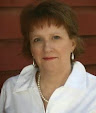
David and Jean Stenzel, Missionaries to Europe & the U.S.


David and Jean Stenzel, a dynamic Christian couple who are serving with Greater Europe Mission, share their story of how God has touched their life and in turn, has enabled them to bless others throughout Europe and the United States with love and encouragement. I met with Jean one morning this summer and as we sat at her kitchen table here in O'Neill, NE, she told me some wonderful and entertaining stories of how God is working in this world...

“Dave and I met at the University of Nebraska and were married while we were at UNL, when we both were in teacher's college. When Dave went into teaching, he discovered Jesus Christ in a very personal way. With that discovery, his entire focus began to change, and his question was, “How can I serve Jesus Christ?” We were living in married housing which contained 1500 apartments, and one day Dave turned to me and said, “These people don’t all know Jesus Christ. They think because they are a bit ‘religious’, that they are saved. That’s the way I was-- I was very religious and went to church every Sunday and I thought I was saved, but I didn’t have that personal relationship with Jesus Christ. These people need to know!” So Dave made up his mind that he was going to knock on every door and invite everyone who wanted to come, to join an Evangelistic Bible study.”

“We began this study with 10 people, and those that came to the Lord, would go into a discipleship study. One of the ladies that came to this study was named Janet and she was a nurse. Her husband was definitely not interested in Jesus Christ, as he wanted to taste everything that the world had to give. He thought it was alright that his wife would ‘get religious’ but he didn’t want any of it for himself. Janet began to grow in Christ and go into the discipleship study. We just had some really wonderful conversations over the Word of God and she was excited to think that she could turn to Jesus for every problem that came into her life. One day, she called me and said, “Jean, I don’t know what to do, can you give me some advice? My husband came home the other day and said, “We’re not as close as we used to be, so I want to do some of the things that we did when we were courting that brought us so close.” Janet said, “One of the things we use to do was fix a big pot of espresso and we would put cream and sugar in it and sit before the fireplace and we would smoke pot.” She said, “When I accepted Christ, I didn’t need drugs any more because I have Christ and He’s better than drugs, but my husband wants to do this so that we will grow closer together, have a better relationship, and return to our courtship days, so to speak.” She said, “I want to honor that because he has the right motive and the right idea, but I don’t want to smoke pot. What should I do?” I said, “I don’t have an answer for you Janet, all I can tell you is that I will pray and I will ask God to deliver you. I have no idea how this will turn out.” I prayed for her, David prayed for her, and we called the women’s Bible study that she was in and we all immediately prayed for her. I said, “Girls don’t just pray, get down on your knees and say, “Lord deliver her!”

“We didn’t find out until much later that Janet’s husband came home and he had these cigarettes of pot that he laid out on the coffee table, along with the coffee cups. He put down a big rug and made a fire in the fireplace. She was making coffee in the kitchen, and he came in and said, “how’s the coffee coming? I’ve got everything ready.” She informed him the coffee was just about done. They had an old dog, about 14 or 15 years old that always just kind of stayed in a corner of the kitchen, that really didn’t do anything but get up and eat, drink a little water, go outside, and then come back in and lay in his corner on the rug. She said the coffee was done, and as her husband carried it into the living room, she cleaned up a few things and then she started to go into the living room. As she went past the dog, the dog got up, ran into the living room, jumped up on that coffee table and ate all the pot! He began to run around in circles and ran back into the kitchen. She followed him into the kitchen, he ran to the door, she opened the door, and he disappeared for three days. When he returned, he scratched on the door, and she let him in and he laid back down on the rug like he always did. She said after she had let the dog out, she went back into the living room and her husband looked at her and shook his head. Now, here’s a man who doesn’t give God any credence whatsoever... he said, “Your God certainly takes care of you and protects you, doesn’t He?” Janet said they had a wonderful evening, but just with the coffee. They sat in front of the fireplace and they talked and thought, “wow, what a miraculous God this is...” I couldn’t help but think of 1 Peter, chapter 3... our God tells us that the women should be like Sarah; that they obey their husbands, but trust God and do it without fear, and God will protect and deliver. I couldn’t help but think that this is really similar to that little incident.”


“As Dave and I saw God do these kinds of miracles, we knew that God wanted to use us in full time Christian work. We found Greater Europe Mission and they sent us to Austria where we served and built a church. The church is still going today; they have started a sister church and have sent out four missionaries from that church. We are praising God for what He can do in a country that has very few Christians.”
Dave and Jean also travel to other European countries such as France, Germany, and most recently, Portugal. “When we came home (to the United States) from Europe, the mission contacted us and asked if we would take the job as pastors to missionaries, and we said “yes”. We travel around the United States visiting missionaries on furlough (from foreign countries) and people who have been appointed to go, but who have not yet left this country. They are sometimes wondering what is awaiting them and what it will be like, so we are able to talk to them and answer what questions they may have. We also take trips overseas about three times a year, each visit lasting 3-4 weeks at a time (this fall they will be traveling to mostly Western Europe and the southern countries), meeting with missionaries to help and encourage them in their work.
 
When I asked Jean if she had any other examples of how God is moving in this world, she said, “What I think is exciting is that God had sent us to Austria to spread the Gospel, and one of the young Austrian men that accepted Christ and was discipled by Dave, traveled to the United States along with his wife and children to a bible school in Wyoming. They came here, learned English, and will now take the Gospel back to Europe. It is interesting how God moves people around to do His will.”


To learn more about Greater Europe Mission, please visit their website: www.gemission.org

Thursday, April 8, 2010

Our 'World View'


Hello Everyone!  As you will notice, I have not added a post here for awhile. I have been involved in other writing pursuits, but hopefully, I can get back to Fresh Air Life to write about the interesting people and stories I have come across in the past year.  You can find me at http://www.goodmorningmarysunshine.blogspot.com/, or, www.jrliggett.com/ 'INTERVIEW', a free, monthly e-mail forum where I interview blissfully satisfied users of J.R.LIGGETT'S Shampoo Bar.  I also have a few stories on http://www.nebraskaruralliving.com/ under 'Articles & Essays'.  Sometimes it gets hectic, but I LOVE it!  Until then, keep breathin' that Fresh Air!

Tuesday, February 16, 2010

See You In the Spring...

Keep this image in your thoughts... I'll be taking a break from Fresh Air Life until the spring thaw. In the meantime, visit me at www.goodmorningmarysunshine.blogspot.com.
See you there!

Saturday, January 16, 2010

A Sharing Heart

If you'd like to take a step back in time, when life moved at a slower pace, or if you'd just like to blow some of those cobwebs out of your mind and get a 'Fresh Air Life' start on the new year, I'd suggest a leisurely, open air horse-drawn wagon ride pulled by Kelly Kloppenborg's team of majestic Clydesdale horses.

Kelly, who has been employed by the Natural Resource District in O'Neill, Nebraska for six years as a water technician, is also co-owner with his brother Kirby of the Emmet Hay Company. The business was started in 1909 by the Cole family, and Don, Kelly's father, bought the business in 1970.

Kelly and his wife Terry of Emmet, Nebraska, (population 77), have been sharing the pleasure of their Clydesdale horses by providing others with a glance back at how farming and transportation was before the automobile.

'Horse power' is our operative word here...these 'gentle giants' who "have a good disposition and are well-behaved", were bred as work horses. Kelly has used the horses for "all facets of the haying operation"; mowing, raking, sweeping, pulling the hay stacker up, etc., and also for planting and harvesting oats and a bit of dirt work.

Long before Emmet Hay's Centennial year, Don Kloppenborg had the idea of using the Clydesdales to demonstrate how the hay operation was carried out before modern farm equipment did the job; and in August of 2009, 100 years after the inception of the business, the Kloppenborgs featured working demonstrations in a day long event on the outskirts of town.


In 1999, when Kelly had bought his first horses--a mother and daughter, he decided to "let other people enjoy the horses the way I do"and began giving horse-drawn wagon rides. He had the horses bred, resulting in a colt from the mother, and the day I was taking these pictures, the brother and sister team--'Hank and Dixie', were pulling a wagon full of laughing Kindergartners and their teachers.

Along with school children, he also provides rides for wedding parties, carolers, family reunions, and non-profit organizations such as 4-H. Recently he donated a sleigh ride to the Faith Regional Hospital in Norfolk, Nebraska for their fund raiser, and locally he donated a wagon ride to a local church's auction that was purchased by a young engaged couple to be used for their July 2010 wedding. The Kloppenborgs also enjoy 'teaming up' with other horse owners who drive about 6 miles out into the country in covered wagons to have a family style old fashioned picnic lunch.

Kelly currently has 6 horses that he uses together or separately. His daughter, grandson, and father also help drive the horses, so it's a "family thing".

When I've seen the horses moving down the street at a brisk trot, their bells jingling and riders waving and joyfully shouting to passersby, I'm thankful of the Kloppenborg's willingness to give back to their community in such a wonderful, fun and sharing way.

J.R.


Thursday, January 7, 2010

Hometown Girl Makes the Grade!


Our favorite poetess, Geraldine Kilgore, has just had her story entitled 'You Can Take the Girl Out of Nebraska' published in the e-magazine, Nebraska Rural Living. You'll find it refreshing! Click Here.

J.R.

Friday, December 25, 2009


Fresh Air Life land is in the midst of a blizzard... so I thought I'd post an appropriate poem written by Geraldine Kilgore, a poetess who spent her childhood northeast of O'Neill...
The Snowstorm
Today we had a snowstorm,
It sneaked in with the rain.
Damp and clinging, heavy snow,
It stuck to everything.
The walnut tree is cotton trimmed,
It's stark branches soft and white.
And dogwood, blessed little tree
Is draped in ermine for the night.
The garden just this morning
That was weed rough and so bleak,
Is smooth as icing on a cake,
Glistening now and sleek.
The pines beside the window
Are a picture of delight.
Like great arms holding mounds of snow,
Bowed down in prayer tonight.
And even the small and spindly rose
Huddled by the drive this morn,
Is bundled up in snow tonight
And looks quite snug and warm.
This poor old saddened world of ours,
Beset with care and woe,
Seems more peaceful and so quiet
When God sends the soft, white snow.
Geraldine Kilgore copyright 2009

Wednesday, December 9, 2009

The Work of His Hand

Beth Seng, sixth in a family of six girls and one boy, was born and raised in Tanganyika, (Tanzania) Africa to missionary parents. Her parents had arrived in Africa in 1933, and for the next 33 years, her father was to do a "pioneer work" with the Africans. At that time, most of Africa had not been reached with the Word of God. Beth's father, a "very gifted man--a man of great faith", and an evangelist and a pastor, would bike to far-from-home remote villages, accompanied by another national pastor, teaching the Word of God to people who had never seen a white man, nor heard the name of Jesus. Later in his life, he taught at a national Bible School, training men to be pastors. Many of these men, even though they are now very old, in turn, fanned through-out the country to spread the 'Good News' of Christ.

At the age of 6 years, Beth was sent to a small boarding school in Tanzania for grades First through Fifth. All through her school years in Africa, from First to Twelfth grade, the schedule rotated with 3 months at school, and 1 month at home with parents. For grades 6-12, Beth attended the Rift Valley Academy, a well-known boarding school in Kenya that is still in operation today. The academy overlooks The Great Rift Valley, a continuous geographic trench, that runs from Northern Syria in Southwestern Asia to central Mozambique in East Africa. From her home in Tanzania, Beth would take a boat, traveling over Lake Victoria for one day and one night, arriving at the town of Kisumu. After a day's rest, the children boarded a train that would transport them overnight to a station near their school.

Beth spoke of the bonding and close ties that were formed with the other missionary children at these boarding schools, but she also acknowledged the difficulties and the loss as a result of their inevitable parting... "The problem with missionary life is that you're coming and going all the time...there are furloughs, people are leaving, sometimes they leave for good--you just leave them for the rest of your life!" "And then, when it's time for you to leave after you've finished school at age 18, you're going and you're never coming back."


After graduation in 1967, Beth returned to the United States, moving in with her sisters (who had previously graduated and left RVA) in Baltimore, Maryland. She received a degree from Gordon College in Massachusetts, and began work as a first grade teacher. Upon marriage, she quit teaching and devoted her time and efforts to her marriage and raising her three children. Later, she lived in Pennsylvania, and South America (as a missionary for Wycliffe Bible Translators for eight years), then moving to Tucson, Arizona in 1992, where she lived until moving to Page, Nebraska in March of 2007.


When speaking of her artistic ability and her interest in clay sculptures, Beth recalls an observant fifth grade teacher--also an artist herself--who noticed Beth's talent for art and told her she 'had a gift'. "She had people sit and we were to draw them and add shading." "She saw a gift even though what I saw of what I drew, I thought, 'well, it's okay, but it wasn't all that great...', but she noticed the gift and I just remember that she said, "you have a gift in art and you should pursue it."" "I've always loved to draw and copy things, and I love any kind of art work, but I've found something different---the clay work is 'me'."


During Beth's time in Arizona, she was first exposed to glazed dough art, a craft that became very popular in the 1980's. Beth eagerly tried her hand at this craft and found that she had a lot of imagination when it came to creating figures and objects--much more imagination than with her drawings. She began creating and selling 2-dimensional scenes on wooden plaques--the only problem was that within 5 years, with the glazed dough being exposed to the elements, it began to disintegrate and fall apart.

1n 1995, Beth came in contact with a woman from Germany who had crafted a refrigerator magnet of a pot with the tiniest, most delicate flowers. Beth enquired as to what this medium was---and this was her serendipitous introduction to polymer clay. She immediately purchased some clay and began making and selling earrings, necklaces, and figurines. One day, a woman asked if she could make 'Storyteller' earrings. A Storyteller is a Native American doll that depicts an elder telling the children the legends and traditions of their people. This request, and Beth's eventual completed design, turned out to be "one very significant change in my artwork".


Beth continues to create earrings, necklaces, figurines, and nativity sets with her polymer clay. "I love the clay because I was able to begin without spending a lot of money." She uses the Premo brand of polymer clay, blending different colors of clay to make stripes (as beautifully illustrated in the robes and blankets) and a finished product that resembles the look of wood. She also uses a pasta machine to make flat pieces for clothing and a clay 'extruder', which is useful in making strands for hair. Obviously, Beth's fine-tuned imagination is the stepping off point for any creation; she must visualize the figure or animal she wishes to create, and then design poses and clothing. First is the body, and then clothing, shoes, hats, and accessories. The process is time consuming, intricate, and inventive, and her figurines exude personality and emotion in their facial expressions and poses.

Beth has been supplying two stores for the past ten years with her Polymer clay sculptures and nativity sets; one in Tubac, Arizona, and a tea room in Tucson. Her creations are also available for purchase at the 'Farmer's Store' in Page, Nebraska.


Beth states, "Having the background that I have, and how God has developed my character through life and through traumas and joys, all that's gone on in my life---I want my work to be a reflection of what God has done in me." She continues, "I can see how He's turned so many things that I thought were negative in my life to where they have become something that I'm thankful for." " I really do have joy in my life and I feel like that's what I want to show in my craft." "When my grandchildren look at my work, I want them to see a reflection of what God has done in me."


J.R.


Photo credits: #1, 3, 6, and 7 by Beth Seng


Wednesday, November 18, 2009

Momentarily Runnin' Out of Steam...

No, this isn't the end of the line, but I'm going to take a brief break from 'Fresh Air Life' to do a little 'deep breathing' on my own... With Thanksgiving and Christmas on the horizon, I've a million tasks to take care of, leaving me little time to invest in some quality interviews. But don't run off... even at this moment, I have in mind two individuals who I am wanting to visit with before the year is out. So, enjoy your time with family and friends, eat heart-healthy, and check in here for your much-needed dose of good ol' Fresh Air Life. As always, you can contact me through e-mail, and you can still see what I'm up to @ http://www.goodmorningmarysunshine.blogspot.com/

Oh, and BTW, check out my story that's been recently e-published in the on-line magazine, 'Nebraska Rural Living'. Under 'Also Featured This Month', you'll find my literary contribution entitled, 'Flowers From Mom'. You'll enjoy the rest of the magazine also!

Now, I need to get crackin' on making those hand made Christmas gifts...

J.R.

Thursday, November 12, 2009

Resourcefulness

During the late 1990's, while living at my in-law's farm, I had many occasions to observe my father-in-law, Marvin Richter, toil for hours, even in his advancing years. He would arrive from town (he and the family had moved to O'Neill in the 1960's, but they kept the farm) early in the morning to disc, plant, combine, work cattle, fix machinery, cut musk thistle, fix fence, bale hay, or any other chore that was necessary to keep the farm running and producing. After sliding out of his Ford Bronco, he'd step into the house to say a "Howdy-do" and briefly discuss what he had planned for the day. I would top off his coffee (he had a McDonald's breakfast McMuffin on the front seat of his car), and after a bit of mild arguing with my husband (the really loud stuff came later), he'd be out the door and off to the task at hand.

Marvin purchased a secondhand combine, which had been manufactured in the 1940's, from a farmer in Ewing, Nebraska. I'll never forget the day I saw it come lumbering up the drive...going full bore at around 3 miles an hour...he claimed he had put the pedal to the metal and it had topped out at a breezy 13 MPH on the highway from Ewing to the farm. I was positive that it wouldn't make it half way through the next harvest. I was wrong.

This particular morning, I looked out the kitchen window to see him driving up the lane in his light blue, Chevy 'LUV' pick-up, the bed loaded with plastic trash cans and lids, stacked within each other. (Husband and I always enjoyed shouting, "Don't take your LUV to town!") Now, Marvin is a spontaneous sort of fellow...he'll come up with an idea and be ready to jump right on it, so I just settled back and thought I'd see what he was up to this day. I think, amongst others, one of his slogans should be, 'Where there's a will, there's a way...' and this morning, despite his storage and equipment limitations, Marvin was going to fan some alfalfa seed---130 acres of it--give or take an acre or two.

That fall, he had let his alfalfa crop go to seed, wind rowed it, and then combined the seed. He purchased an old fanning mill---from an even older friend---and was determined to separate the 'seed from the chaff'. Various weed seeds needed to be removed; sand drop seed, foxtail, sunflower, and a bit of brome grass. This fanning mill had originated from between the 1920's to the 1930's, and Marvin had to craft and replace a few pieces so the mill would operate. This would not be a difficult task, as he has not only been a farmer in his life, but also an excellent carpenter.

He set up shop in the 'garage', which had been built in the early 1900's by his father as the original home. It was "the first house on the place". The 'place' had been homesteaded during the Kincaid Act when Marvin's forebears had arrived from Germany in search of 'greener pastures'. Marvin's older half-sister, Thelma, who died in 2004 at the age of 100, had lived in this house with Ernest her father, and her mother Addie, Ernest's first wife. Addie later died after childbirth, and Ernest then married Barbara, Marvin's mother. After building the present house on the property, this building was converted into a two-car garage for the family's Ford Model T car.

Now, I don't pretend to understand how machinery works, and especially this particular piece...my expertise was in taking the photos and visiting with Marvin at the same time... However, it appeared to me that he would dump the alfalfa 'horns' (and other weed seed) in the top of the mill, a belt would turn a wheel which in turn, moved or shook a tray, which I believe had a screen on the bottom, that somehow separated the alfalfa seed from the chaff. Please excuse my use of technical jargon.

The chaff would fly out of the chute and onto the ground, leaving the finished product---the minute alfalfa seed--ready to go back into the plastic trash cans for storage. This clean seed, of course, was sold for an enormous profit...


"And then the cow says to the farmer..." (some light bantering while working...)


Marvin labored for two days until his project was completed, only stopping for a bite of lunch on our screened-in porch and a bit of a snooze (while sitting in a chair) afterwards. Then, as the afternoon turned to evening, and as Marvin's strength and energy played out, I would see him slowly walk to his pick-up and drive away into the sunset.
Marvin turned 86 years old this past October. He is the father of 6 children, 13 grandchildren, 18 great-grandchildren, and 3 more on the way---if my figures are correct. He's a West Nile Virus survivor, 'Energizer Bunny', wonderful Father-in-law, and his current hobby is wine making. He still does some occasional farming and within the past couple of days, he assisted in moving cattle out of his pastures. With deer hunting season upon us, he'll most likely be out to get a deer also.
J.R.
Photo credit, top photo of combine: Maria Rath 2007


Friday, November 6, 2009

Tompkins Corner

In the year of 1883, Archibald Tompkins, Neil Tompkins' Great-Grandfather (of English descent) arrived from New York State to homestead a parcel of land in Inman, Nebraska where today, Neil and his wife Ruth, a nurse, now live. Neil was born and raised here and he and Ruth, have in turn raised four children here; two sons and two daughters, now grown with lives of their own.

Neil is the fourth generation on the 'home place', where he operates a dairy and is a member of the Dairy Farmers of America. Neil says, "The place has always had milk cows and beef cows..." This is evidenced by the existence of the large red barn built in 1913 by Neil's grandfather, Leon. The sturdy barn, now used for hay storage and an occasional newborn calf, also has a rope swing in the hay loft that the Tompkins children spent hours playing on. There is also the requisite farm pet...a very friendly cow dog name 'Spicey'. And upon hearing the gentle mooing of a cow, the complete mental picture of 'farm' and all that represents, comes into focus.

Neil's dairy herd consists of a mix of 80 Holstein and Jersey cows. Each breed has it's advantages and disadvantages in relation to milk quality and production. The Holstein is the widely recognized black and white spotted cow that we usually envision when thinking of a dairy cow. The Holstein produces more pounds of milk, but has lower milk butterfat components. (Milk is made up of three components: butterfat, protein, and other solids.) The brown Jersey cow is a smaller breed, with less milk production, but a higher percentage of butterfat. Neil says, "Higher butterfat is affected by genetics and feed. I work with a nutritionist that recommends a balance of protein; so much corn, so much hay..."


At two years of age, and after a cow has had her first calf, she is then classified as a milk cow. "At any given time, 80% of the cows are being milked, and 20% are dry". An 'ideal' situation is a cow that is producing milk for 10-11 months. Since constant milk production is stressful, a cow is given a two month rest period to build up it's health before having another calf.


The cows are milked twice a day---at four o'clock in the morning and four o' clock in the afternoon. Neil has one full time and one part time employee who, along with himself, take turns with the milking. As there are 14 milkings a week, Neil is responsible for five of them. The cows are pastured and need to be rounded up and brought in each time, which takes about 15-30 minutes. "Cows are a creature of habit and they do like a routine". The milking parlor can accommodate eight cows at one time, four on each side. The equipment set-up takes from 30 to 40 minutes, and milking the entire herd takes a little over 3 hours. Neil states, "It takes ten man hours a day to run the operation." The raw milk is picked up every 2-3 days, and hauled to either South Dakota, Iowa, or Minnesota for processing and then, distribution. When Neil and Ruth's children were younger, they were 'forced' to help with the milking. Neil joked, "That's probably why none of them are talking of coming back home..."
I asked Neil about the 'Good, the Bad and the Ugly' of a dairy operation... The 'good' is, "A regular cash flow...you get a check twice a month, and even though the amount varies (depending on the price of milk), it gives some stability". "And milk cows and stock cows compliment each other in terms of equipment, machinery, and facilities". He adds, "It's a way to be in agriculture, to 'be your own boss'".

The 'bad' is "Mastitis"---a bacterial infection. "It can be treated, but it is hard to get rid of". "Feed is the #1 cost, in addition to the on-going expenses of labor, equipment, upkeep, and replacing animals". And, "if a cow won't breed back, they have to be sold for slaughter".

The 'ugly' is, "No days off". "Milking has to be done whether it's a sunny day, a blizzard, or a holiday". Even worse is when a good production cow is down and can't get up. The day I was visiting, a Holstein had given birth the day before and had become weakened and unable to get up. Neil and his crew were trying to get the cow on it's feet, and would be trying for another few days. Hopefully, the cow would not have to be euthanized.

Neil says he has always been interested in agriculture, and when in college, he had briefly considered becoming an agriculture missionary. However, he felt that God showed him that in His plans, he should continue the dairy business with his parents. Overall, Neil loves the lifestyle of the country and the physical work, and he is convinced that the fresh, country air and the sparse population density has kept him healthy. Besides, there's that undeniable and indescribable heart connection to the land and the history and heritage of the Tompkins family.
J.R.


Wednesday, November 4, 2009

I've recently visited with Inman resident Neil Tompkins about his dairy operation. The story will be posted soon!

Friday, October 30, 2009

This Time of Year

Autumn Days
These are the days of gold and blue
Of yellow, orange, and scarlet too.
Of chilly nights and clear, crisp days.
Of morning shrouded gray with haze.
Of chattering birds that congregate
On field and fence and garden gate.
Of pumpkins laying abandoned, lost
Since vines have felt the first, hard frost.
Of roses brightest of the year.
And rows of cornstalks, brown and sear.
Of rosy apples, juicy and sweet.
Of leaves that rustle at our feet.
Of low hung ribbons of smoke that glides
From burning leaves at eventide.
Of cold, gray mist that meets the dawn
That turns to rain before it's gone.
These are the days and all too few.
These autumn days of gold and blue.
Geraldine Kilgore Copyright 2009

And of course, we hope and pray for dry weather so the farmers will be able to harvest this crop!


J.R.